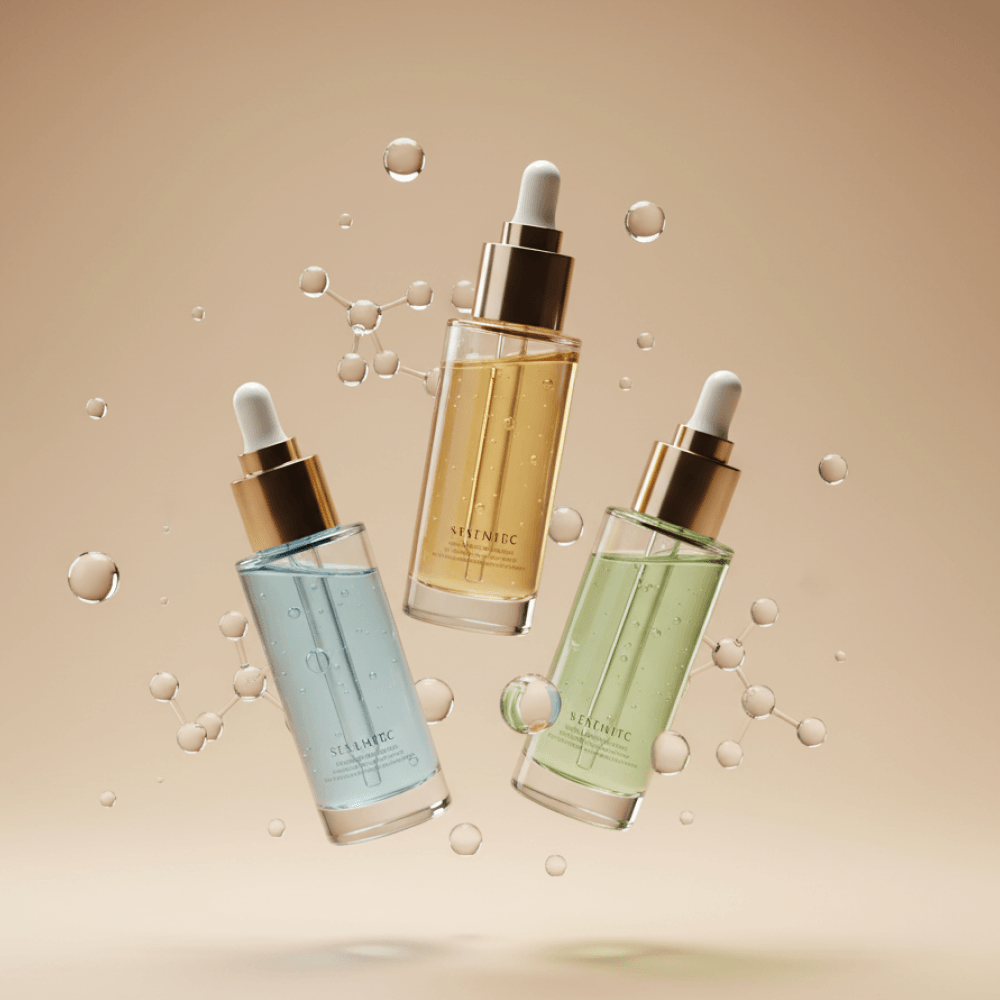
Why Are Exosome, PDRN, and Bakuchiol Leading K-beauty Trend?
Published: 2025.11.14
Last updated: 2026.09.30
2026 K-Beauty Trend Report: The Ingredients Driving the Next Wave of Korean Skincare
As global interest in Korean skincare continues to rise, the 2026 K-Beauty trend conversation for 2026 is shifting toward ingredients backed by science, safety, and visible results. Distributors, resellers, and online sellers are no longer choosing products based on packaging or social buzz alone. Instead, they’re focusing on functional actives that consistently translate into wholesale demand.
Among all emerging categories, three ingredients—Exosome, PDRN, and Bakuchiol—stand out as the clearest indicators of where the K-Beauty market is heading. These actives reflect a broader trend that defines Korean skincare in 2026: technology-driven, irritation-conscious, and designed for global diversity.
1. Exosome: The Fastest-Growing Ingredient in the K-Beauty Trend Landscape
Across the K-Beauty industry, exosomes have become one of the fastest-expanding ingredients. Originally studied in cell-to-cell communication research, exosomes are now used by Korean derma brands to support skin renewal and barrier recovery. Over 2024–2025, their integration into serums, creams, and masks accelerated sharply.
The reason exosomes are shaping 2026 K-Beauty trends is simple:
buyers associate them with advanced regeneration, yet Korean brands offer them at far more accessible prices than Western biotech skincare. This combination—high-tech + approachable—has made exosome lines attractive to resellers in North America, MENA, and Southeast Asia.
For sellers preparing 2026 assortments, highlight:
Source transparency (stem cell-derived vs. plant-derived complexes)
Stability and concentration
The difference between “exosome-inspired” and “exosome-complex” formulas
Clear explanation equals higher buyer trust—and faster conversion.
Related Products
2. PDRN: A Regeneration Ingredient Buyers Already Trust
PDRN (Polydeoxyribonucleotide) is not new to the global beauty scene, but its role in the 2026 K-Beauty trend is more important than ever. Known for its use in professional skin-repair treatments, PDRN carries a built-in credibility that many actives cannot match.
Korean pharmacy and clinic-rooted brands have refined cosmetic-grade PDRN into milder, daily-use formulations, making it easier for distributors to introduce “clinic-inspired regeneration” products without regulatory complications.
Buyers gravitate toward PDRN because it delivers on three universal needs:
repair, calming, and revitalization—all without the irritation seen in harsher actives.
To capitalize on this trend in 2026, sellers should offer simple, concise explanations that clarify:
What PDRN is
How it supports recovery
Why it fits into a daily routine
A well-structured PDRN lineup (ampoule + cream + mask) often becomes a dependable sales anchor.
Related Products
3. Bakuchiol: The Rise of a Gentle, Retinol-Alternative Star
If the search data and buyer requests from 2024–2025 tell us anything, it’s that Bakuchiol is now firmly embedded in the global K-Beauty ingredient trend. As more consumers seek retinol-like results without irritation, bakuchiol continues to gain traction for its gentle, plant-derived profile.
Multiple dermatology journals have noted bakuchiol’s potential in improving fine lines, texture, and firmness—without the sensitivity that often accompanies retinoids. This “effective but mild” positioning aligns perfectly with K-Beauty’s strength: high-performance formulas suitable for sensitive skin.
For 2026, sellers should position bakuchiol as:
A vegan alternative to retinol
A mild but effective anti-aging active
A safe option for sensitive and barrier-weakened skin
Bakuchiol also pairs naturally with peptides and hydrating complexes, allowing brands to stand out even in crowded markets.
Related Products
4. Why These Three Ingredients Define the 2026 K-Beauty Trend
Looking across global buyer behavior, the trends are consistent:
buyers want technology, safety, and credible results. Exosome, PDRN, and Bakuchiol each satisfy this demand but in different ways.
Exosome: next-generation regeneration with biotech appeal
PDRN: clinically familiar, recovery-driven trust
Bakuchiol: gentle anti-aging for sensitive skin
Together, they represent the future of Korean skincare exports—science-forward, global-friendly, and deeply compatible with the “gentle but effective” philosophy that defines modern K-Beauty.
5. Actionable Tips for Sellers Preparing 2026 Lineups
To turn these trends into actual sales, sellers should focus on three areas:
1) Curate ingredient-focused collections
Group products not by brand but by benefit:
“Regeneration Routine,” “Sensitive-Skin Repair,” “Retinol-Alternative Set.”
2) Provide clear, structured product briefs
Buyers respond better to simple breakdowns:
ingredient %, skin concern, formulation type, and usage order.
3) Match regional preferences
Region | Key Preferences | Why It Works (Evidence-Based) |
|---|---|---|
MENA (Middle East & North Africa) | Regeneration, brightening, post-sun repair | Strong UV exposure and dry climate increase demand for pigment care and barrier recovery. Middle Eastern customers show high interest in derma and clinic-inspired actives. |
North America | Retinol alternatives, clinical-clean formulas | Rising concern about retinol irritation has boosted interest in gentle actives like bakuchiol. Clean-beauty standards and minimalist, science-forward formulas dominate major retailers. |
EU (European Union) | Vegan, transparent sourcing, sustainable formulas | EU has the world’s strictest cosmetic regulations (e.g., CPNP). Consumers prioritize vegan/eco-friendly products and clear ingredient origins. Large retailers push sustainability and traceability. |
SEA (South East Asia) | Calming, moisture, lightweight textures | Hot, humid climate leads to preference for fast-absorbing formulas. Search volume consistently favors centella, heartleaf, lightweight serums, and soothing essences. |
This personalization dramatically increases conversion rates.
FAQ About the 2026 K-Beauty Trend
What is the biggest 2026 K-Beauty trend?
The biggest 2026 K-Beauty trend is the growing demand for science-backed skincare ingredients that deliver visible results while remaining gentle on the skin. Ingredients such as Exosome, PDRN, and Bakuchiol are leading this shift because they combine advanced skincare technology with everyday usability for a wide range of skin types.
Why are Exosome, PDRN, and Bakuchiol leading the 2026 K-Beauty trend?
These three ingredients represent the core direction of the 2026 K-Beauty trend. Exosome is associated with advanced skin renewal, PDRN is trusted for skin recovery and regeneration, and Bakuchiol offers anti-aging benefits as a gentle alternative to retinol. Together, they meet global demand for effective yet irritation-conscious skincare.
Which markets are driving the 2026 K-Beauty trend?
The 2026 K-Beauty trend is being driven by strong demand from North America, the Middle East, Europe, and Southeast Asia. While preferences vary by region, buyers consistently seek products with transparent ingredient stories, proven efficacy, and formulations suitable for sensitive skin.
How should distributors prepare for the 2026 K-Beauty trend?
Distributors can prepare for the 2026 K-Beauty trend by building ingredient-focused product collections, providing clear educational content about key actives, and selecting products that match regional consumer preferences. Highlighting benefits, ingredient transparency, and everyday usability can also improve buyer confidence and wholesale conversions.
Which Korean skincare ingredients will remain popular beyond the 2026 K-Beauty trend?
Although skincare trends continue to evolve, ingredients such as Exosome, PDRN, and Bakuchiol are expected to remain important because they address long-term consumer demand for skin repair, anti-aging, and barrier care. Rather than being short-lived trends, these ingredients are becoming core categories within modern Korean skincare.
Conclusion: The K-Beauty Trend for 2026 Is Clear
The next wave of K-Beauty trends won’t be defined by viral challenges or influencer moments.
It will be shaped by ingredients with staying power—the ones buyers consistently reorder because they deliver real results.
Exosome. PDRN. Bakuchiol.
These three actives are more than passing trends; they are strategic tools sellers can use to build a stronger, higher-performing catalog in 2026.
If you structure your lineup around them—supported by simple education, region-specific guidance, and transparent sourcing—you’ll be exactly where the global K-Beauty market is heading next.


.png&w=3840&q=100)
.png&w=3840&q=100)
.png&w=3840&q=100)
.png&w=3840&q=100)